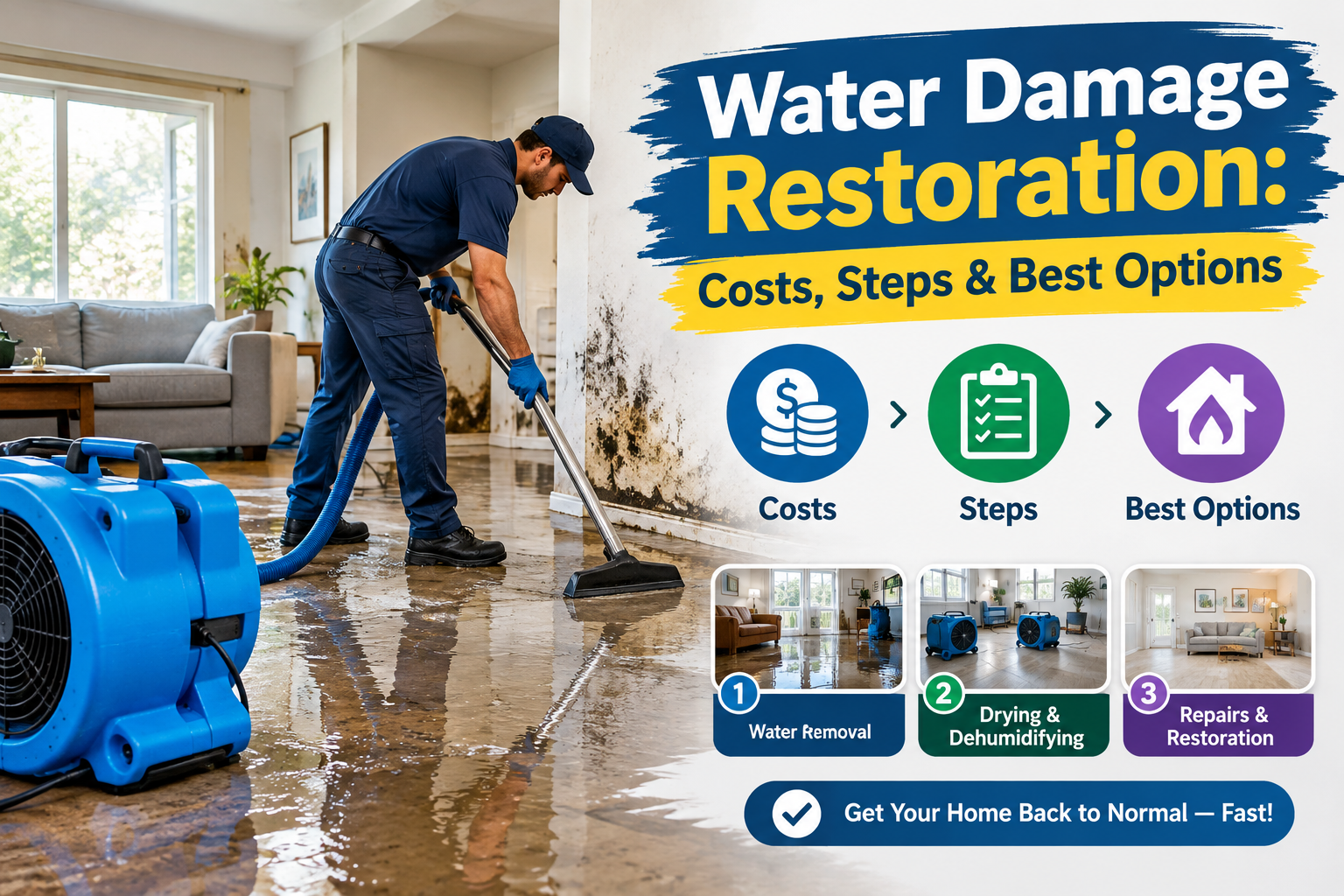
Water damage restoration is the process of drying, cleaning, and repairing a property after water gets where it should not be. A burst pipe at 2 a.m. can pour hundreds of gallons into your home in one hour. By morning, floors buckle, drywall sags, and a musty smell fills the air.
Time is your biggest enemy. The EPA says mold can start growing within 24 to 48 hours on wet materials. Every hour you wait adds to the bill.
Last winter, a homeowner in Minneapolis found a frozen pipe had split behind her kitchen wall. She called a local crew within 90 minutes. Her total bill was $3,400. Her neighbor waited three days. His bill passed $14,000.
This guide shows what restoration involves, what it costs, and how to pick the best option. You will find clear tables, real numbers, and simple steps you can use today.
What Is Water Damage Restoration? Water Damage Repair Explained
Water damage restoration is a step-by-step service that returns a wet property to its safe, dry, pre-loss condition. Pros also call it water mitigation, flood cleanup, or water extraction. The goal stays the same: stop the damage and rebuild what was lost.
The Institute of Inspection, Cleaning and Restoration Certification (IICRC) sorts water damage into three categories:
- Category 1 (clean water): Broken supply lines, rain, or a leaking sink.
- Category 2 (gray water): Dishwasher or washing machine overflow.
- Category 3 (black water): Sewage backups and river flooding.
Each category needs its own plan. Clean water can turn into gray water in 48 hours. Black water needs protective gear and careful disposal.
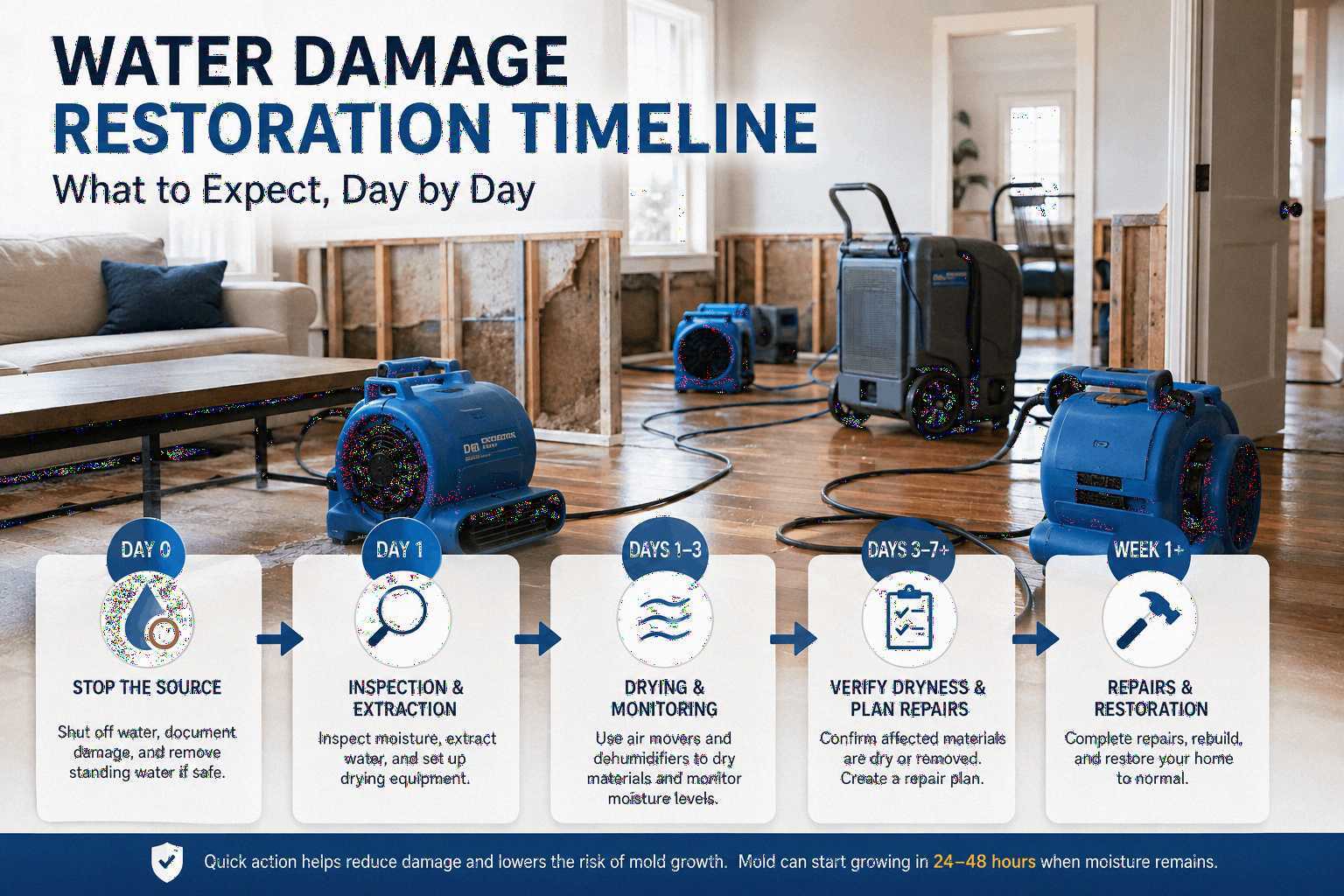
A standard job has six stages:
- Emergency call and inspection
- Water removal with pumps and vacuums
- Drying with air movers and dehumidifiers
- Cleaning and sanitizing
- Mold prevention
- Repairs and rebuilding
Common causes across the USA include burst pipes, roof leaks, failed water heaters, hurricane flooding, and appliance leaks. The Federal Emergency Management Agency (FEMA) lists flooding among the most common and costly disasters in the country. If your pipe burst, read our burst pipe repair guide for the first steps to take.
Not every water damage repair option offers the same tools. This table compares three common choices.
| Feature | Professional Restoration Company | DIY Cleanup | General Contractor |
|---|---|---|---|
| Response time | 24/7, often within 1–2 hours | Whenever you start | Business hours, often days |
| Water extraction | Truck-mounted and submersible pumps | Wet vac and buckets | Basic pumps |
| Drying equipment | Industrial dehumidifiers and air movers | Box fans | Rented fans |
| Moisture detection | Thermal cameras and meters | Guesswork | Limited |
| Mold prevention | Antimicrobial treatment | Household cleaners | Sometimes |
| Insurance help | Photos, reports, direct billing | None | Estimates only |
| Certification | IICRC-certified techs | None | Varies |
Fast Emergency Response for Water Damage
Top companies answer calls day and night. Crews arrive with pumps, hoses, and drying gear on the truck. Fast action limits how far water spreads into walls, subfloors, and insulation.
Advanced Drying and Moisture Detection
Water hides. It soaks into drywall, wood framing, and carpet padding you cannot see. Thermal imaging cameras find wet spots behind walls. Moisture meters track drying progress each day, so the crew knows when the job is truly finished.
Insurance Claim Support for Flood Cleanup
Many restoration firms document damage with photos, moisture logs, and itemized reports. Adjusters need this proof. Some companies bill your insurer directly, which saves you paperwork. Our home insurance claims guide covers what to expect.
Pros and Cons of Professional Water Damage Restoration
Benefits of Hiring a Restoration Company
- Faster drying with commercial-grade equipment
- Lower risk of hidden mold and rot
- Safe handling of gray and black water
- Proper paperwork for insurance claims
- Written scope of work and clear timelines
- Repairs that protect your home’s resale value
Drawbacks to Consider
- Higher upfront cost than a wet vac and fans
- Noisy equipment running for several days
- Quality varies from company to company
- Large jobs may disrupt your daily routine
A family in Tampa tried to dry a flooded living room with four box fans. The carpet looked dry in a week. Two months later, mold spread along the baseboards. A professional team then removed drywall and treated the walls. The final cost was double what a quick professional job would have been.
Cheap fixes often turn into expensive repairs. Read our mold remediation guide to see how fast small leaks grow into big problems.
Results depend on the source of water, the size of the area, and how fast the work begins. This table shows typical drying timelines with professional equipment.
| Damage Type | Typical Drying Time | Mold Risk If Delayed |
|---|---|---|
| Small clean-water leak | 2–3 days | Low to medium |
| Appliance overflow | 3–4 days | Medium |
| Roof leak after a storm | 4–7 days | Medium to high |
| Sewage backup | 5–7 days plus cleaning | Very high |
| Major flood | 7–14 days plus rebuild | Very high |
Three things drive good performance:
- Speed: Water removal within the first 24 hours saves more materials.
- Airflow and dehumidification: Drying works best when wet air is pulled out of the room.
- Daily monitoring: Crews check moisture levels every day and adjust equipment.
In Houston, a two-story home flooded during a summer storm. A crew removed standing water the same day and ran dehumidifiers for six days. The owners saved most of their hardwood floors. Repairs stayed limited to lower drywall and baseboards.
Water Damage Restoration Cost in the USA: 2026 Pricing Guide
Prices vary by state, water type, and square footage. These ranges reflect common national estimates. Your local quote may differ.
| Damage Level | Typical Situation | Estimated Cost |
|---|---|---|
| Minor | One room, clean water, quick response | $1,200–$3,500 |
| Moderate | Multiple rooms, drywall and flooring affected | $3,500–$8,000 |
| Major | Whole floor, gray water, structural drying | $8,000–$20,000 |
| Severe | Flood or sewage, rebuild needed | $20,000–$50,000+ |
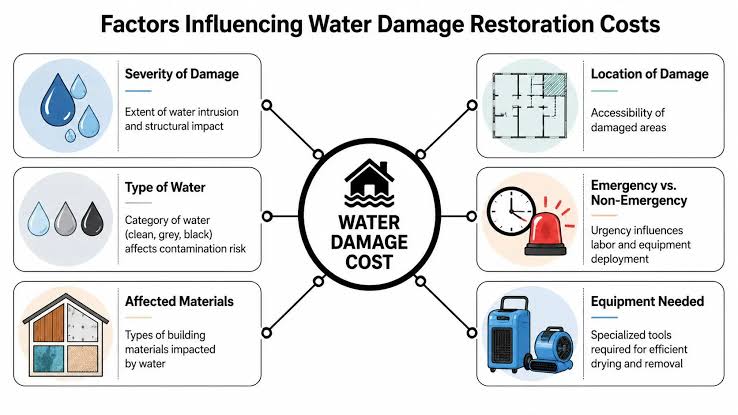
What Affects Your Restoration Bill
- Water category: Black water costs more because of safety and disposal rules.
- Affected area: More square feet means more equipment and labor.
- Materials: Hardwood, plaster, and insulation cost more to dry or replace.
- Response time: Delays raise the level of damage.
- Location: Big cities usually charge more than small towns.
Does Insurance Cover Water Damage Restoration?
Standard homeowners policies often cover sudden and accidental events, like a burst pipe. They rarely cover slow leaks, neglect, or flooding from rising water. Flood coverage needs a separate policy. The Insurance Information Institute explains these differences in plain language. Call your insurer right away and ask what your policy covers.
How to Choose a Restoration Company
- Check for IICRC certification
- Ask if the company is licensed and insured in your state
- Get a written estimate before work begins
- Read recent local reviews
- Ask about 24/7 availability
- Confirm they use moisture meters and document drying progress
Water Damage Restoration FAQs
1. How long does water damage restoration take?
Most small jobs take three to five days. Larger floods can take two weeks or more, plus time for rebuilding. Drying is only the first part of the job.
2. What should I do first after water damage?
Stay safe. Turn off the main water valve and, if needed, the electricity at the breaker panel. Take photos and video of everything. Remove valuables from wet areas. Call a restoration company and your insurance provider. The American Red Cross offers safety tips for flooded homes.
3. Can I do water damage cleanup myself?
You can handle a tiny clean-water spill, such as a small puddle from a leaking cup or sink drip. Anything larger needs professional drying gear. Sewage or flood water is never a DIY job. It carries bacteria and health risks.
4. How fast does mold grow after water damage?
Mold can begin within 24 to 48 hours. Visible spots may take longer to show. A musty smell is often the first sign. See our flood cleanup checklist for a step-by-step response plan.
5. Is water damage restoration covered by insurance?
Coverage depends on the cause. Sudden events like a burst pipe are often covered. Long-term leaks and rising flood water usually are not. Read your policy and ask your agent before you sign any work order.
Conclusion: Who Wins and Why
Professional water damage restoration wins. DIY cleanup works only for tiny, clean-water spills. General contractors are strong at rebuilding but often lack the drying tools and speed needed in the first 48 hours.
A certified restoration company gives you fast response, proper equipment, mold protection, and insurance support. That mix protects your health, your home, and your wallet. The Minneapolis and Tampa stories show the same lesson: quick, expert action costs less than slow, cheap repair.
If water has entered your home, act now. Shut off the water, take photos, and call a licensed, IICRC-certified pro. Every hour counts.