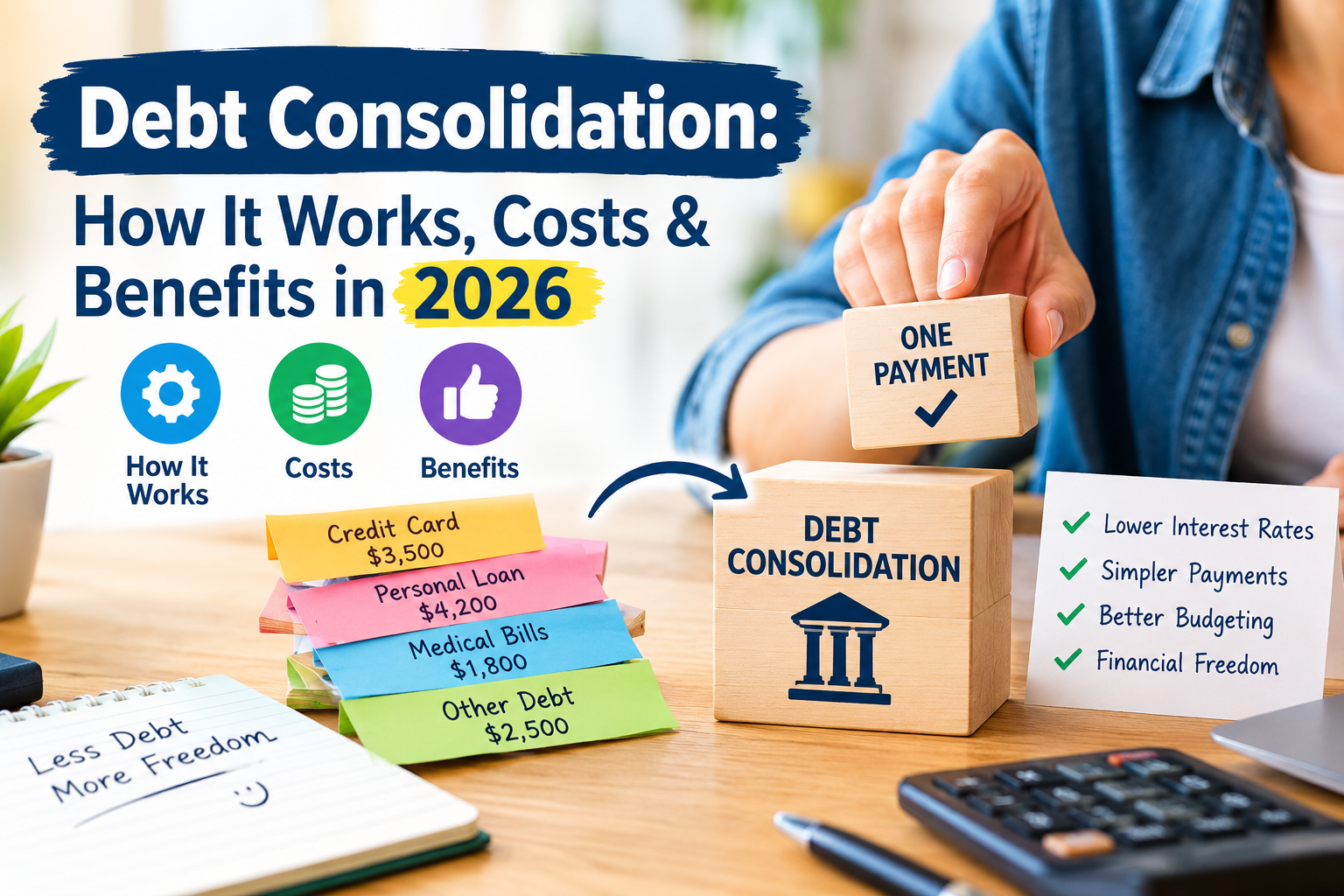
Is Debt Consolidation Right for Your Monthly Budget?
Debt consolidation can help people who are managing several credit card balances, personal loans, or other high-interest debts. Instead of making multiple payments to different lenders, consolidation may combine eligible debts into one new account with a single monthly payment.
For many Americans, the biggest problem is not simply the amount they owe. It is keeping track of different due dates, interest rates, minimum payments, and account balances.
Imagine having four credit cards with four different payments every month. One card charges 28% APR, another charges 24%, and two others have different rates and due dates. A consolidation loan could potentially replace those balances with one loan and one payment.
That does not automatically make the debt cheaper. The new interest rate, loan term, fees, and spending habits all matter.
This guide explains how debt consolidation works, common options, potential costs, benefits, risks, and practical examples for U.S. consumers.
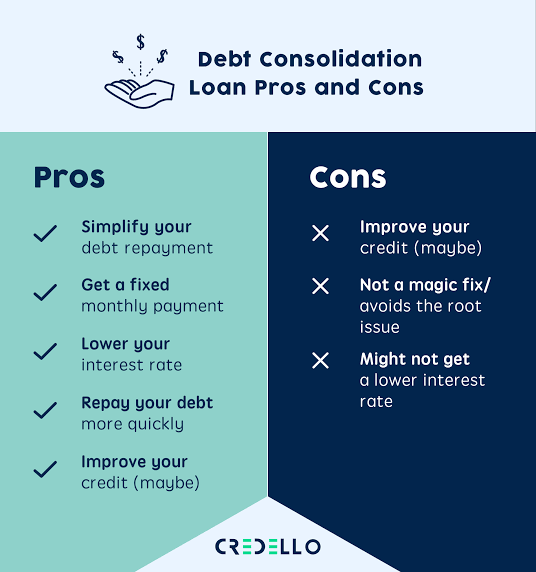
Debt consolidation means combining multiple debts into one new debt or repayment arrangement.
The basic idea is simple:
- You have several existing debts.
- A new financial product is used to pay some or all of them.
- You make payments on the new account instead of several old accounts.
- The new interest rate and repayment period determine your overall cost.
Common debts that people may consider consolidating include:
- Credit card balances
- Personal loans
- Medical bills
- Certain private student loans
- Other unsecured consumer debts
Debt consolidation is different from debt settlement. Consolidation generally involves repaying the debt under new terms, while debt settlement involves negotiating with creditors to accept less than the amount owed.
Consumers can learn more about credit and debt management through the official Consumer Financial Protection Bureau and Federal Trade Commission websites.
Debt Consolidation Options in the USA
There is no single consolidation product that works for everyone. The right option depends on credit, income, debt type, interest rates, and repayment goals.
Debt Consolidation Loans
A personal loan can be used to pay off multiple eligible debts. You then repay the personal loan according to its terms.
Potential advantages include:
- One monthly payment
- Fixed repayment schedule
- Potentially lower interest than high-rate credit cards
- A clear payoff date
The loan may have an origination fee, and the interest rate depends heavily on the borrower’s credit profile and lender requirements.
Balance Transfer Credit Cards
A balance transfer card may allow a borrower to move eligible credit card balances to another card, sometimes with a promotional APR.
A balance transfer can be useful when the promotional period provides enough time to reduce the balance.
Watch for:
- Balance transfer fees
- Promotional-period expiration
- Regular APR after the promotional period
- Credit-limit restrictions
A missed payment can also affect the account’s terms.
Home Equity Loans or Lines of Credit
Homeowners may consider borrowing against home equity. These products can offer different rates and repayment structures from unsecured personal loans.
The major concern is collateral. Your home can be at risk if you fail to meet the loan obligations.
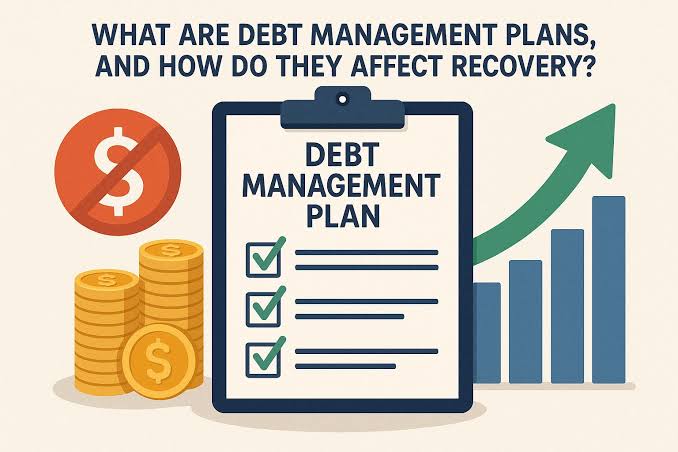
Debt Management Plans
A nonprofit credit counseling agency may help create a debt management plan for qualifying consumers. The consumer generally makes payments through the program, which distributes funds to participating.
Debt Consolidation Features Comparison
| Option | Payment Structure | Interest Rate | Main Benefit | Main Risk |
|---|---|---|---|---|
| Personal loan | Fixed monthly payment | Usually fixed | Predictable repayment | Fees or higher rate |
| Balance transfer | Credit card payment | Promotional or variable | Temporary low APR | High APR after promotion |
| Home equity loan | Fixed payment | Usually fixed | May offer lower rate | Home is collateral |
| HELOC | Variable payment | Usually variable | Flexible borrowing | Rate can change |
| Debt management plan | Program payment | Negotiated terms may apply | Structured repayment | Not all debts qualify |
The key difference is that consolidation changes how debt is structured; it does not erase the underlying obligation.
Pros and Cons of Debt Consolidation
Pros of Consolidating Debt
One payment:
Managing one monthly payment can be easier than remembering several due dates.
Potential interest savings:
If the new rate is lower than your current weighted average rate, you may reduce interest costs.
Clear repayment schedule:
A fixed personal loan can provide a specific payoff date.
Simpler budgeting:
A predictable payment can make monthly cash-flow planning easier.
Reduced credit-card utilization over time:
Paying down revolving balances can affect credit utilization, although credit-score results vary by individual circumstances.
Cons and Risks of Debt Consolidation
You may pay more overall:
A lower monthly payment can result from extending the loan term. That can increase total interest.
Fees can reduce savings:
Origination fees, balance-transfer fees, closing costs, or other charges can change the calculation.
Credit requirements vary:
The most attractive rates may not be available to every borrower.
Debt can return:
If credit cards are paid off and then used heavily again, a borrower can end up with both the consolidation loan and new card balances.
Collateral may be involved:
Home equity products can put a property at risk if payments are not made.
How Does Debt Consolidation Perform?
The most important way to evaluate consolidation is not simply the monthly payment. Compare the total cost of the existing debt with the total cost of the new arrangement.
Debt Consolidation Performance Example
Suppose a consumer has:
- $12,000 in credit card debt
- Average APR of 25%
- Several minimum monthly payments
The consumer receives a hypothetical $12,000 personal loan at a lower APR with a fixed repayment period.
The monthly payment could become easier to manage, but the actual savings depend on the new APR, loan term, origination fee, and whether the borrower avoids adding new card debt.
| Measure | Existing Debt | Consolidation Example |
|---|---|---|
| Starting balance | $12,000 | $12,000 |
| Number of accounts | 3 | 1 |
| Interest rate | 25% average | Hypothetical 15% |
| Payment structure | Multiple | Single |
| Repayment period | Variable | Fixed |
| Potential fees | Existing account terms | Depends on lender |
| Main goal | Manage several balances | Simplify repayment |
This example is for illustration only. Actual loan rates, payments, approval decisions, and total costs vary.
Debt Consolidation Pricing and Cost Comparison
There is no universal price for debt consolidation. Costs depend on the product and lender.
| Consolidation Method | Common Cost Factors | Rate Structure |
|---|---|---|
| Personal loan | Origination fee may apply | Often fixed |
| Balance transfer card | Transfer fee may apply | Promotional then regular APR |
| Home equity loan | Closing and other fees may apply | Often fixed |
| HELOC | Fees may apply | Often variable |
| Debt management plan | Agency fees may apply | Program-specific |
A useful calculation is:
Total consolidation cost = principal + interest + applicable fees
Do not compare loans only by monthly payment. A $400 payment over a longer term can cost more than a $500 payment over a shorter term.
Real-World Cost Example
Consider two hypothetical offers for a $15,000 debt balance.
Offer A
- 12% APR
- 36-month term
- $500 origination fee
Offer B
- 16% APR
- 48-month term
- No origination fee
This is why borrowers should compare APR, fees, monthly payment, loan term, and total repayment amount together.
How to Compare Debt Consolidation Loans
Before applying, make a simple debt worksheet.
Record:
- Current balance
- APR
- Minimum payment
- Remaining repayment period
- Total monthly payments
- Potential consolidation APR
- New loan term
- Fees
- Estimated total repayment
Check Your Credit
Credit reports can contain errors that may affect lending decisions. Consumers can access their official credit reports through AnnualCreditReport.com.
Check for:
- Incorrect balances
- Accounts you do not recognize
- Incorrect payment information
- Outdated information
Compare APR Instead of Advertised Rates Alone
An advertised interest rate may not represent the rate you personally receive.
APR can provide a broader cost comparison because it can reflect certain fees associated with borrowing.
Calculate the Break-Even Point
If consolidation costs $600 in fees but saves $150 per month in interest and payments that would otherwise go toward higher-cost debt, the simple fee break-even point would be four months.
However, monthly payment reduction and actual interest savings are not always the same thing, so use the lender’s complete repayment disclosure.
Common Debt Consolidation Mistakes
Choosing the Lowest Monthly Payment
A smaller payment may look attractive, but a longer term can increase total interest.
Ignoring Fees
Always include origination, transfer, annual, closing, or other applicable fees.
Closing Every Credit Card Immediately
Closing accounts can affect available credit and credit utilization. Consider the consequences before making account changes.
Continuing to Spend on Paid-Off Cards
This is one of the biggest practical risks. Consolidation works best when the borrower also addresses the spending or cash-flow issue that created the debt.
Using Home Equity Without Understanding the Risk
A lower interest rate does not eliminate the risk associated with secured borrowing.
Frequently Asked Questions About Debt Consolidation
1. Does debt consolidation hurt your credit?
Applying for new credit can result in a hard inquiry, depending on the lender and application process. Opening or closing accounts can also affect credit factors. The long-term effect varies based on payment history, balances, account age, and other information in your credit profile.
2. Is debt consolidation the same as debt settlement?
No. Debt consolidation generally combines debts into a new repayment structure. Debt settlement involves negotiations aimed at resolving debt for less than the amount owed. Each approach has different costs, risks, and potential credit consequences.
3. What credit score do I need for debt consolidation?
There is no single credit-score requirement for every consolidation product. Lenders use their own eligibility criteria, which may include credit history, income, existing debt, and other financial information.
4. Can I consolidate credit card debt?
Credit card debt is one of the common types of debt consumers consider consolidating. Options can include personal loans, balance transfers, and certain debt management programs. The best structure depends on the borrower’s circumstances and the actual terms offered.
5. How do I know if debt consolidation will save money?
Compare your existing debt’s total expected cost with the new arrangement. Include the interest rate, loan term, fees, and any other charges. A lower monthly payment alone does not prove that you will save money.
Conclusion: Who Benefits From Debt Consolidation?
Debt consolidation can be useful for U.S. consumers who have multiple high-interest debts and can qualify for a new repayment arrangement with manageable terms also explore Best Web Hosting for Small Business in 2026
The strongest case for consolidation is usually based on numbers rather than convenience alone.