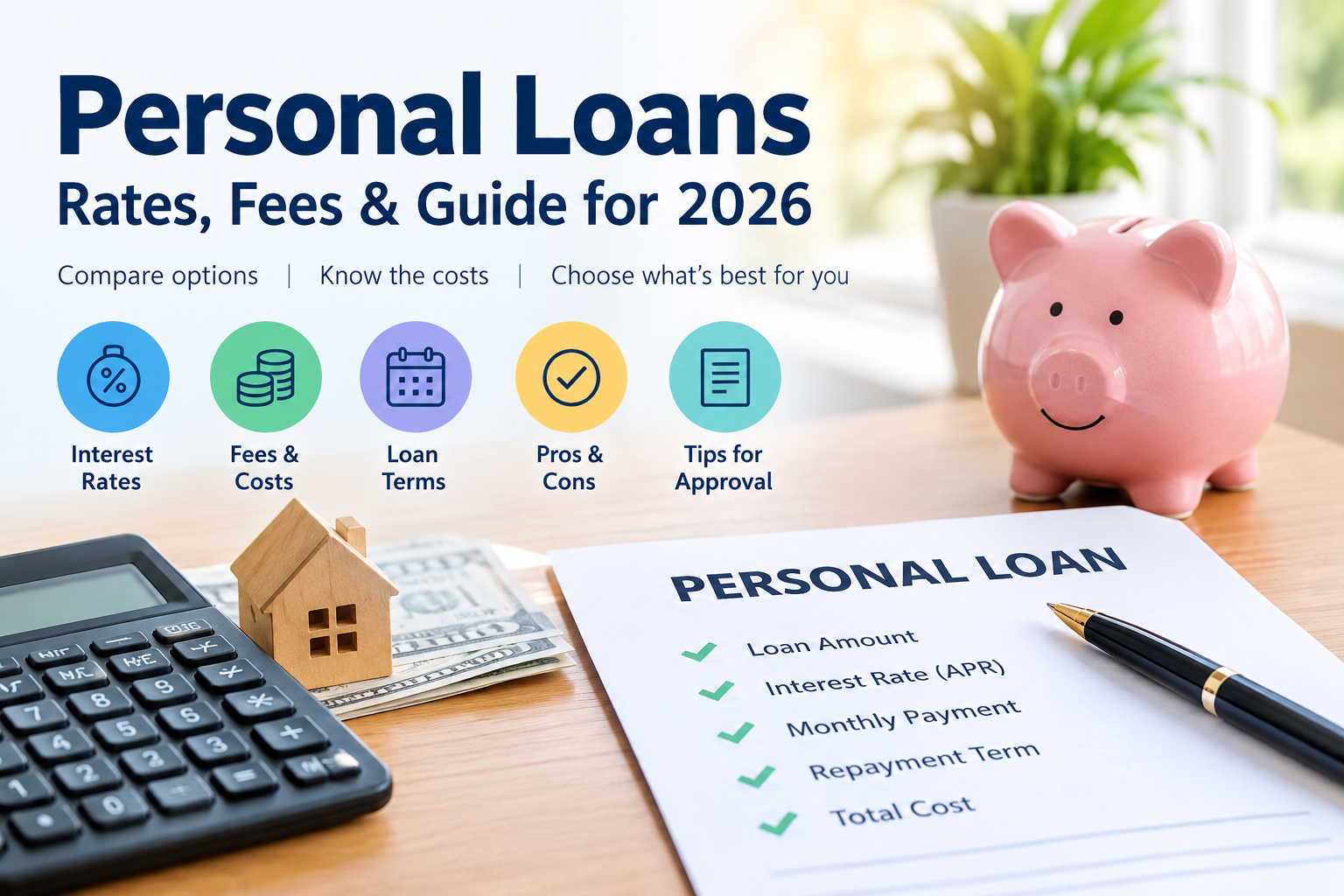
Are Personal Loans Right for You?
Personal loans can provide quick access to money when savings are not enough for a large expense. You might need funds for a home repair, medical bill, debt consolidation, moving costs, or an unexpected emergency. A personal loan can cover the expense with one lump-sum payment and a set repayment schedule.
The cost of borrowing deserves close attention. As of September 2026, Bankrate reports an average personal loan rate of 12.44% for its benchmark borrower, while rates for highly qualified borrowers can start considerably lower. Bankrate’s current data shows typical APRs ranging from about 8% to 36%.
Your rate may be higher or lower.
Lenders typically consider factors such as credit history, income, existing debt, loan amount, and repayment term. The Consumer Financial Protection Bureau notes that these factors can affect the terms offered on a personal installment loan.
The goal is not simply to find money quickly. The goal is to understand the total cost before you borrow.
What Are Personal Loans?
Personal loans are installment loans that provide you with a fixed amount of money that you repay through scheduled payments over a specific period.
Many personal loans are unsecured, meaning you do not need to put your home or car up as collateral. Some lenders, however, may offer secured personal loans.
Common reasons Americans use personal loans include:
- Debt consolidation
- Home improvement
- Emergency expenses
- Medical costs
- Major purchases
- Moving expenses
- Wedding expenses
- Vehicle repairs
- Unexpected household bills
The CFPB describes personal installment loans as closed-end loans. The borrower receives the money at the beginning and generally repays it in fixed installments over an agreed period.
Personal Loan APR vs. Interest Rate
The interest rate tells you the cost of borrowing the principal. The APR, or annual percentage rate, is broader because it can include the interest rate plus certain fees associated with the loan.
The CFPB recommends paying attention to APR when comparing borrowing costs.
For example, imagine two lenders:
- Lender A offers a 10% interest rate with an origination fee.
- Lender B offers an 11% interest rate with no origination fee.
The lower advertised interest rate does not automatically mean the first loan costs less. Compare the APR, fees, monthly payment, and total repayment.Personal Loan Interest Rates
Personal Loan Features Comparison
| Feature | Personal Loan | Credit Card | Secured Loan |
|---|---|---|---|
| Funding | Lump sum | Revolving credit | Lump sum |
| Collateral | Usually none | None | Usually required |
| Payment | Usually fixed | Flexible minimum | Usually scheduled |
| Rate | Often fixed | Often variable | Fixed or variable |
| Repayment | Set term | Revolving | Set term |
| Common use | Large planned expense | Ongoing purchases | Larger secured borrowing |
| Main consideration | APR and total cost | Interest and balance growth | Collateral risk |
Personal loans are often useful when you know the exact amount you need and want a predictable repayment schedule.
Key Personal Loan Features to Compare
Check these details before accepting an offer:
- APR
- Loan amount
- Monthly payment
- Repayment term
- Origination fee
- Late-payment fee
- Prepayment policy
- Funding time
- Credit requirements
- Autopay discounts
The CFPB says personal installment loans may include origination, documentation, optional insurance, and late fees. Reading the loan disclosure before signing can help you understand the full cost.
Pros and Cons of Personal Loans
Pros of Personal Loans
Fixed monthly payments: Many personal loans have fixed rates, making the payment easier to plan for.
Flexible borrowing: Depending on the lender, you may use the money for several personal expenses.
Potential debt-consolidation option: One installment loan can replace multiple eligible debts.
No collateral on many loans: An unsecured loan does not normally require your home or car as security.
Clear payoff date: Unlike revolving credit, an installment loan has a defined repayment period.
Cons of Personal Loans
Interest costs: You repay the principal plus interest.
Fees: Some lenders charge origination or other fees.
Credit requirements: A weaker credit profile can make approval more difficult or increase the APR.
Fixed financial obligation: You must make payments even if your financial situation changes.
Longer terms can cost more: A lower monthly payment may mean paying interest for a longer period.
The CFPB recommends comparing multiple loan offers and reviewing the lender’s disclosures before accepting an installment loan.
Personal Loan Performance: Payments and Total Cost
The most useful way to measure a personal loan is not just by its monthly payment. Look at the APR, total interest, fees, and total repayment.
A longer repayment term can reduce the monthly payment while increasing the amount of interest paid over the life of the loan.
Personal Loan Payment Example
| Loan Amount | APR | Term | Approx. Monthly Payment | Approx. Total Payments |
|---|---|---|---|---|
| $5,000 | 8% | 3 years | $157 | $5,659 |
| $10,000 | 12% | 3 years | $332 | $11,968 |
| $15,000 | 15% | 5 years | $357 | $21,420 |
| $20,000 | 20% | 5 years | $530 | $31,797 |
| $25,000 | 25% | 5 years | $733 | $43,969 |
These are illustrative calculations using standard amortization. They do not include possible lender fees, and actual offers vary.
Bankrate’s September 2026 data places the average personal loan rate at 12.44% for its benchmark borrower with a 700 FICO score, a $5,000 loan, and a three-year term. The rate can vary substantially based on the borrower and lender.
Real-World Personal Loan Example
Consider Lisa, a homeowner in Texas who needs $10,000 for an urgent roof repair.
She compares two offers.
The first lender offers a 12% APR for three years. The estimated payment is around $332 per month.
The second lender offers a longer five-year term with a lower monthly payment.
The second payment may look easier, but Lisa should not compare monthly payments alone. She should calculate the total amount she will repay.
Questions Lisa should ask include:
- What is the APR?
- Is there an origination fee?
- How much money will I actually receive?
- What is the total repayment amount?
- Can I comfortably make every payment?
- Is there a fee for paying the loan early?
A loan that fits the monthly budget but costs substantially more overall may not be the right choice for her circumstances.
Personal Loan Pricing and Fees
Personal loan pricing varies by lender and borrower.
Bankrate’s September 2026 data shows that highly qualified borrowers may see rates beginning around 5.96%, while typical advertised APR ranges can extend to 36% or higher depending on the lender.
| Loan Cost | What It Means | What to Check |
|---|---|---|
| Interest rate | Basic cost of borrowing | Fixed or variable |
| APR | Broader annual borrowing cost | Compare lender offers |
| Origination fee | Fee for processing the loan | Percentage and dollar amount |
| Late fee | Charge for a late payment | Amount and grace period |
| Prepayment fee | Charge for early payoff | Whether it applies |
| Documentation fee | Administrative loan cost | Included in loan disclosure |
| Optional insurance | Additional coverage | Whether you actually need it |
Not every lender charges every fee.
The CFPB specifically advises borrowers to examine loan disclosures because fees can add to the total cost of a personal installment loan.Personal Loan Calculator
How to Compare Personal Loan Offers
A simple comparison checklist can prevent expensive mistakes:
- Check your credit before applying.
- Compare offers from several lenders.
- Look at APR, not just the advertised interest rate.
- Calculate the total amount you will repay.
- Check the origination fee.
- Confirm the monthly payment fits your budget.
- Read the late-payment terms.
- Check whether early repayment is allowed without a fee.
- Borrow only the amount you actually need.
For current U.S. rate information, consumers can review Bankrate’s personal loan resources.
For consumer education about loan costs, disclosures, and credit products, the Consumer Financial Protection Bureau offers free guidance.
Suggested internal links for your website: Link this article to your existing pages about credit scores, debt consolidation, personal loan calculators, emergency funds, credit card debt, and budgeting. Descriptive anchor text such as “how debt consolidation works” is more useful than “click here.”
FAQs About Personal Loans
1. What are personal loans used for?
Personal loans can be used for many personal expenses, including home improvements, emergencies, medical bills, major purchases, moving costs, and debt consolidation. Individual lenders may restrict certain uses, so check the loan agreement.
2. What credit score is needed for a personal loan?
There is no single credit score requirement for every lender. Each lender sets its own eligibility standards. Credit score, income, existing debt, loan amount, and repayment term can all affect your offer.
3. Are personal loans better than credit cards?
It depends on the specific offers and your financial situation. A personal loan may provide a fixed payment and defined payoff date. A credit card provides revolving credit but can carry a variable rate. Compare APR, fees, monthly payments, and total borrowing costs.
4. How much can you borrow with a personal loan?
Loan limits vary widely by lender. Some lenders offer several thousand dollars, while others offer substantially larger amounts. Your approved amount depends on the lender’s requirements and your financial profile.
5. Does applying for a personal loan hurt your credit?
A formal loan application may involve a hard credit inquiry, which can affect your credit score. Some lenders offer prequalification with a soft inquiry that does not have the same effect. Ask the lender which type of credit check it uses before applying.
Conclusion: Which Personal Loan Option Wins?
There is no single personal loan that wins for every borrower.
The right choice depends on your credit profile, income, borrowing amount, repayment period, and reason for borrowing.
Someone with excellent credit may focus on securing a low APR. A borrower consolidating credit card debt may focus on whether the new loan reduces the overall borrowing cost. Someone handling an emergency may place greater value on funding speed.
The most important numbers are APR, monthly payment, fees, and total repayment.
Current September 2026 data shows a wide range of personal loan pricing. Bankrate reports an average rate of 12.44% for its benchmark borrower, while highly qualified borrowers may find rates close to 6%.
The practical winner is the loan that meets your financial need at a cost you can realistically afford.
Before signing, compare multiple offers, read the complete disclosure, and make sure the payment fits your budget.