Finding a genuine work-from-home job in the UK can be convenient, but not every advert promising remote work is worth your time—or safe to apply for. Some roles are fully remote, others are hybrid, and some “work from home” adverts are actually freelance or commission-based opportunities.
The good news is that there are reliable ways to search. The key is to look beyond the words remote jobs UK and check the employer, employment status, location requirements, pay structure, contract and application process before sharing sensitive information.
This guide explains how to find legitimate remote jobs in the UK, where to search, which roles commonly work remotely, and how to spot warning signs before accepting an offer.
What Are Remote Jobs in the UK?
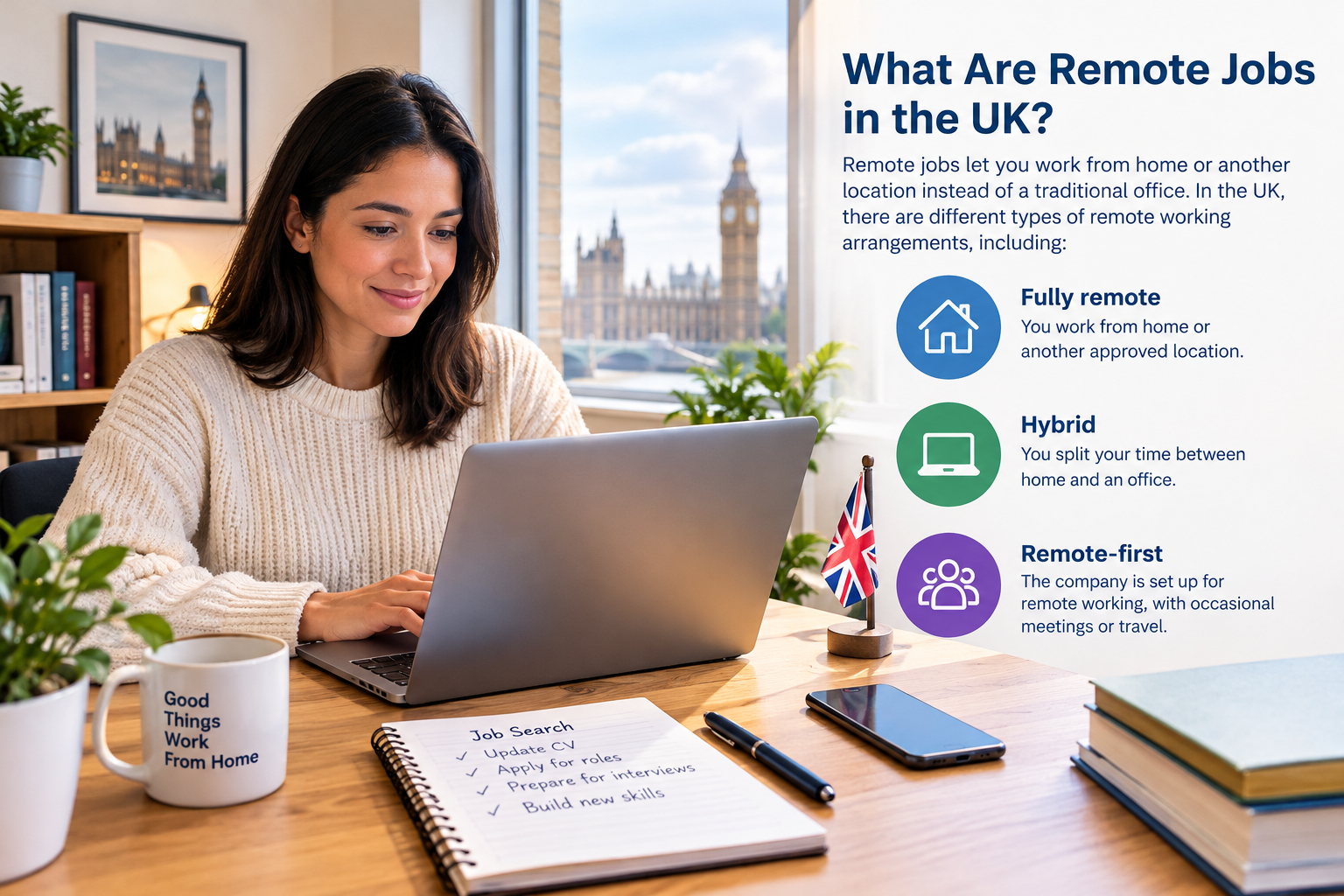
A remote job allows you to perform some or all of your duties away from the employer’s normal workplace.
There are three common arrangements:
- Fully remote: You normally work from home or another approved location.
- Hybrid: You split your time between home and an office.
- Remote-first: The company is organised primarily around remote working, although occasional meetings or travel may still be required.
The wording in a job advert matters. “Remote” does not always mean you can work from anywhere in the world. A company may require you to live in the UK, work within certain UK regions, or attend an office occasionally.
If you already work for a UK employer, employees have a statutory right to request flexible working from their first day of employment. A request can cover where you work, including working from home. Employers must deal with requests reasonably and can refuse them for a genuine business reason.
This right is a right to request, not an automatic right to work permanently from home.
Types of Remote Jobs UK Employers Commonly Offer
Remote work is possible across many professional and administrative fields, although suitability depends on the employer and role.
1. Customer Service
Customer service representatives may handle:
- Email enquiries
- Live chat
- Telephone support
- Customer account issues
- Complaints and follow-ups
Some companies provide equipment and structured training, making these roles accessible to people with customer-facing experience.
2. Administrative and Virtual Assistant Roles
Remote administrative work can include:
- Calendar management
- Data entry
- Document preparation
- Scheduling
- Email management
- Research
- Basic bookkeeping
Be particularly careful with adverts that promise unusually high earnings for simple data-entry work.
3. Technology and IT
Technology is naturally suited to remote working. Potential roles include:
- Software developer
- IT support specialist
- Data analyst
- Cybersecurity specialist
- QA tester
- Cloud support
- Systems administrator
These positions often require specific technical skills and may have more demanding recruitment processes.
4. Sales and Marketing
Remote sales and marketing roles can include:
- Digital marketing
- SEO
- Content marketing
- Account management
- Business development
- Sales development
- Social media management
Check whether compensation is a fixed salary, commission, or a combination of both.
5. Writing and Content
Writers, editors and content specialists may work remotely for agencies, publishers, software companies and other businesses.
Possible roles include:
- Copywriter
- Technical writer
- Content editor
- SEO writer
- Content strategist
Freelance arrangements are common in this area, so check the contract and tax position carefully.
Where to Find Legitimate Remote Jobs in the UK
A good job search starts with reputable sources rather than random social-media posts.
GOV.UK Find a Job
The UK government’s Find a Job service is an important starting point for people looking for vacancies in England, Scotland and Wales. The service allows jobseekers to search for full- and part-time jobs.
Employer Career Pages
If you find a vacancy on another platform, look for the same position on the employer’s official careers page.
This is one of the simplest ways to confirm that:
- The company actually advertised the role.
- The job title matches.
- The application process is genuine.
- The recruiter appears to be connected to the organisation.
Do not rely solely on a logo, company name or profile photograph.
Professional Job Platforms
Established employment websites and professional networking platforms can also be useful. Search using combinations such as:
- “remote customer service UK”
- “UK remote data analyst”
- “fully remote marketing UK”
- “work from home administrator”
- “remote software developer UK”
Use filters for remote, UK, employment type and salary where available.
How to Check Whether a Remote Job Is Legitimate
A polished job advert does not automatically mean the opportunity is genuine.
Before applying, perform a basic verification.
Check the Employer
Search for the company’s official website and compare the information in the job advert.
Look for:
- A legitimate company website
- A physical business presence where appropriate
- A professional careers page
- Consistent contact information
- Evidence of the company operating in the relevant industry
If a recruiter contacts you unexpectedly, verify them through independently obtained company contact details.
UK fraud guidance has previously warned about recruitment scams in which criminals use genuine recruitment platforms to identify victims and then request financial or personal actions that legitimate employers would not normally require.
Never Pay to Get a Job
Be cautious if an employer or recruiter asks you to pay:
- A registration fee
- Training fees before employment
- A deposit for equipment
- A “refundable” application fee
- Money to unlock your salary
A genuine employment opportunity should not require you to send money simply to receive the job.
Do Not Move Money Through Your Personal Bank Account
This is an especially important warning sign.
Never agree to receive an employer’s money into your personal account and transfer it elsewhere because a recruiter says it is part of your job.
UK fraud guidance has specifically warned jobseekers about recruitment scams involving personal bank accounts and financial transactions.
Be Careful With Personal Information
Do not put unnecessary sensitive information on a public CV or recruitment profile.
For example, there is normally no reason for a public CV to display your:
- Full date of birth
- National Insurance number
- Bank account details
- Full identity-document details
Action Fraud guidance has advised jobseekers to avoid putting information such as their full address, date of birth or National Insurance number on public recruitment profiles.
Remote Job Red Flags to Watch For
Some warning signs are particularly common in fake work-from-home opportunities.
| Red Flag | Why It Matters |
|---|---|
| Very high pay for little experience | May be designed to attract applicants quickly |
| Upfront payment | Legitimate employment normally should not require this |
| Recruitment entirely through messaging apps | Makes verification harder |
| No proper interview | Genuine employers normally assess candidates in some way |
| Requests for banking details too early | Could expose you to financial or identity fraud |
| Pressure to act immediately | Scammers often try to prevent verification |
| Vague job description | You may not know what you are actually being hired to do |
| Employer cannot be independently verified | Major reason to stop and investigate |
| Asked to receive or transfer money | Serious warning sign |
A suspicious email, website, text message or advert can also be reported through the UK’s fraud-reporting channels. Action Fraud provides guidance on reporting phishing and suspected fraud.
Employee, Worker or Self-Employed: Why It Matters
Not every person doing remote work is an employee.
UK employment law distinguishes between different employment statuses, including:
- Employee
- Worker
- Self-employed
These statuses can affect employment rights and tax responsibilities. GOV.UK explains that employees generally have the widest range of employment rights, while workers have some rights and self-employed people generally have fewer employment rights.
A remote freelancer may therefore have a very different arrangement from someone employed permanently by a company.
If you are offered a freelance or contractor role, do not assume that calling the arrangement “self-employed” automatically determines your legal status. HMRC provides a Check Employment Status for Tax (CEST) tool for assessing whether a particular engagement should be treated as employed or self-employed for tax purposes.
Remote Work and UK Tax
Working from home does not automatically mean you are tax-free.
If you are an employee, income tax is normally collected through PAYE. If you are self-employed, you may need to deal with your tax through Self Assessment.
This distinction matters when comparing:
£35,000 employee salary
versus
£35,000 freelance income
The headline amount may look identical, but the tax treatment, expenses, benefits, pension arrangements and employment rights can be very different.
For freelance work, check the arrangement carefully and use current HMRC guidance rather than relying on assumptions.
Flexible Working Rights in the UK
For England, Scotland and Wales, employees can request flexible working from their first day of employment.
A statutory request can cover:
- The number of hours worked
- Working days
- Start and finish times
- Where the work is performed
Employees can make two statutory flexible-working applications within a 12-month period. Employers generally need to decide within two months and must consult the employee before refusing a request.
However, requesting remote work is not the same as having an automatic entitlement to work remotely. An employer can refuse a request for a valid business reason.
Northern Ireland has different flexible-working rules, so readers there should check the applicable Northern Ireland guidance rather than assuming the Great Britain rules apply.
Before accepting an offer, ask these questions.
Is the Role Actually Fully Remote?
Look for wording such as:
- Fully remote
- Remote within the UK
- Hybrid
- Remote with occasional office attendance
- Remote-first
“Remote” can mean different things between employers.
Where Can You Work?
Some employers may require you to work from your registered home address or within a particular country.
If you want to work while travelling outside the UK, ask the employer first. Tax, immigration, data-security and employment issues can become more complicated when working from another country.
Who Provides Equipment?
Confirm whether the company supplies:
- Laptop
- Monitor
- Headset
- Software
- Security tools
- Internet-related equipment
Do not buy expensive equipment from an unknown recruiter based on a promise that the employer will reimburse you later.
What Is the Pay Structure?
Determine whether the advertised figure is:
- Annual salary
- Hourly pay
- Contract rate
- Commission
- Salary plus bonus
- Freelance project fee
Also check whether the position is permanent, temporary, fixed-term or freelance.
Pros and Cons of Working From Home
Pros
- No daily commute
- More flexibility in some roles
- Potentially lower commuting costs
- Access to employers outside your immediate area
- Greater control over your working environment
- Useful for people who prefer independent working
Cons
- Fewer opportunities for informal office interaction
- Home-working costs may fall partly on the worker
- Work and personal life can become harder to separate
- Some remote roles require strict monitoring or availability
- Career progression can depend heavily on the employer’s management culture
- Remote jobs can attract significant competition
Acas guidance says employers should make sure home and hybrid workers are not disadvantaged in areas such as support, training, development or promotion.
A Practical Strategy for Finding Work From Home UK Roles
Instead of applying randomly to dozens of adverts, use a focused process.
Step 1: Choose Your Target Role
Start with the work you can realistically perform.
For example:
Customer service + remote + UK
is more useful than simply searching:
Work from home jobs.
Step 2: Improve Your CV
Put relevant remote-working skills near the top.
These might include:
- Written communication
- Video conferencing
- Customer support
- Microsoft 365
- Google Workspace
- CRM software
- Time management
- Data analysis
- Project management
Step 3: Search Several Sources
Use government job services, reputable employment platforms and company career pages.
Do not depend on one website.
Step 4: Verify Before Sharing Sensitive Information
Once you find an interesting role, independently confirm the employer and vacancy.
Step 5: Apply Selectively
A smaller number of well-targeted applications can be more useful than sending the same CV to hundreds of unrelated adverts.
Step 6: Prepare for Remote Interviews
Have a quiet space, reliable internet and a professional setup for video interviews.
Be ready to explain how you manage deadlines, communication and independent work.
Comparison: Remote Job Types
| Remote Work Type | Typical Arrangement | Stability | Flexibility | Good For |
|---|---|---|---|---|
| Permanent remote employee | Full-time employment | Higher | Medium–High | Long-term career |
| Hybrid employee | Home + office | Higher | Medium | People wanting flexibility |
| Fixed-term remote employee | Employment for a set period | Medium | Medium | Short-term career opportunities |
| Freelance | Project/client based | Variable | High | Experienced specialists |
| Contractor | Contract-based engagement | Variable | Medium–High | Skilled professionals |
| Commission-based sales | Earnings partly linked to sales | Variable | High | Sales professionals |
There is no universally best arrangement. The right choice depends on your income needs, experience, desired flexibility and tolerance for uncertainty.
Costs to Consider Before Taking a Remote Job
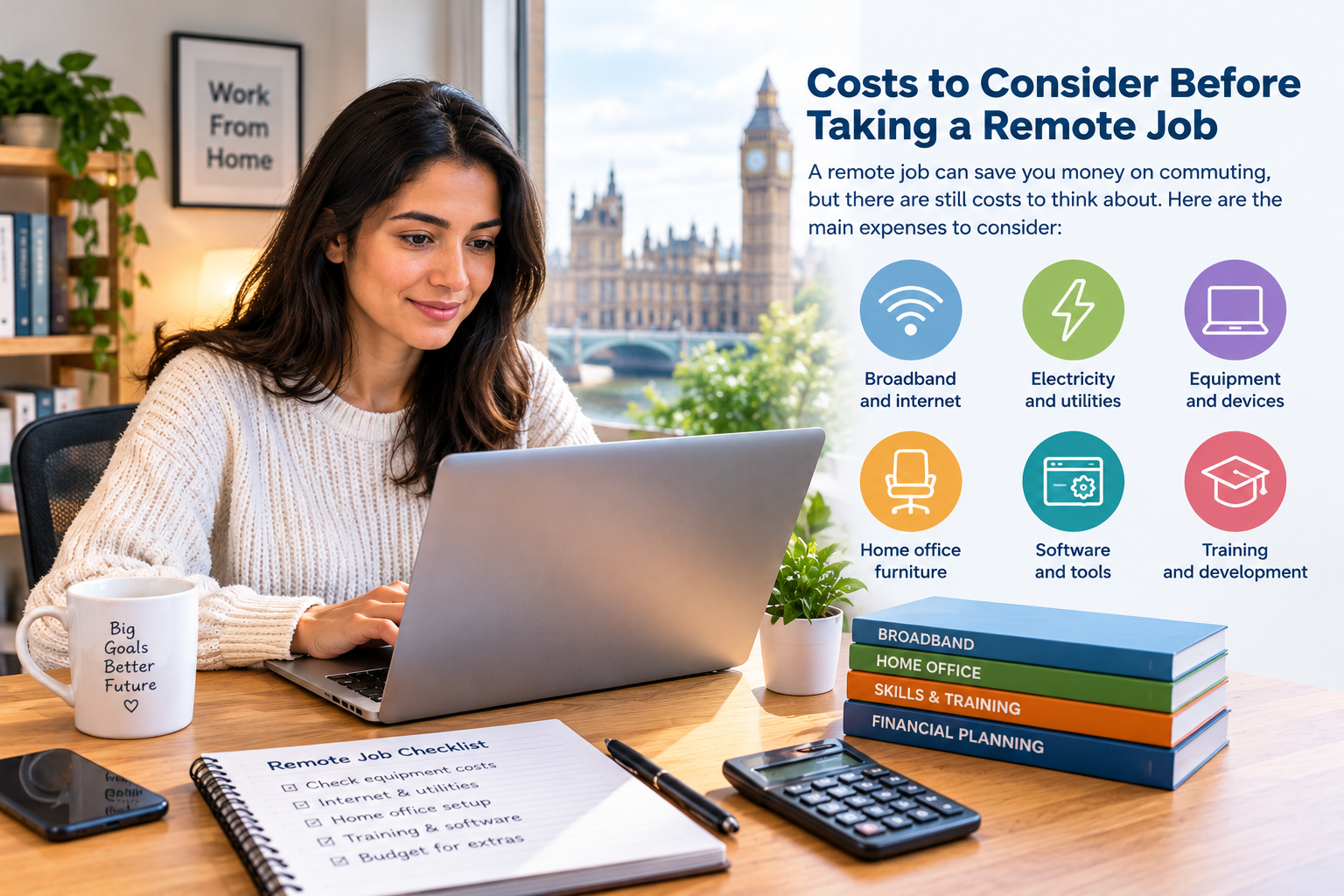
A remote position can reduce commuting costs, but working from home may still involve expenses.
Possible costs include:
- Broadband
- Electricity
- Home-office furniture
- Computer equipment
- Software
- Professional training
Whether an employer contributes to these costs depends on the role and company policy.
HMRC has specific rules covering employees who work from home, including guidance on homeworking arrangements and possible tax treatment of certain expenses.
Do not assume that every home-working expense can automatically be claimed as a tax deduction.
Author/Expertise Note
This article is intended as general employment and job-search information, not legal or tax advice. UK employment and tax rules can vary according to jurisdiction, employment status and individual circumstances. Employment-rights information in this article has been checked against GOV.UK, legislation and Acas guidance available on 8 October 2026.
FAQs
1. Are remote jobs available in the UK?
Yes. Remote and hybrid positions exist across areas such as customer service, technology, administration, marketing, sales, finance and professional services. Availability varies by industry, employer and experience level.
2. What is the best way to find legitimate remote jobs in the UK?
Start with reputable job platforms, GOV.UK’s Find a Job service and official company career pages. Before applying, verify that the employer and vacancy are genuine.
3. Can I work from home from my first day of employment?
In England, Scotland and Wales, employees have the right to request flexible working from their first day. This can include requesting to work from home. It does not mean the employer must approve the request.
4. How can I tell if a work-from-home job is a scam?
Be suspicious of jobs requiring upfront payments, unusually high pay for little experience, vague responsibilities, rushed decisions, requests to transfer money or requests for sensitive financial information before a legitimate hiring process has taken place.
5. Can I work remotely for a UK company from another country?
Not necessarily. A UK company may restrict where employees can work because of tax, employment, immigration, data-security or business requirements. Always ask the employer before working outside the UK.
6. Are remote freelance jobs the same as remote employee jobs?
No. Freelancers and self-employed contractors can have different tax responsibilities and employment rights from employees. HMRC provides guidance and a CEST tool for employment-status questions.
7. Do legitimate remote employers provide equipment?
Some do and some do not. Check the job advert, contract and company policy to find out whether equipment such as laptops, monitors or software is supplied.
8. Can I put my National Insurance number on my CV?
It is generally unnecessary to publish sensitive information such as your National Insurance number on a public CV or recruitment profile. Action Fraud has specifically advised jobseekers to avoid including sensitive identifying information on public recruitment profiles.
Conclusion
Finding legitimate remote jobs UK opportunities requires more than searching for “work from home” and applying to the first attractive advert.
A safer approach is to identify the type of role you want, search reputable sources, verify the employer, understand whether the position is employment or self-employment, and check the exact remote-working arrangement before accepting an offer.
The biggest warning signs are requests for money, unexplained financial transactions, excessive personal-information requests and employers that cannot be independently verified.
For UK employees, flexible-working rights provide an important route for requesting changes to where and how work is performed, but approval still depends on the employer and applicable rules.
Start with a focused job search, tailor your CV to remote-working skills, and treat every opportunity that sounds unusually easy or profitable with extra caution.